
You Don’t Have to Make Everyone Think Well of You
By Neha Juneja
Therapist | Mental Health Professional
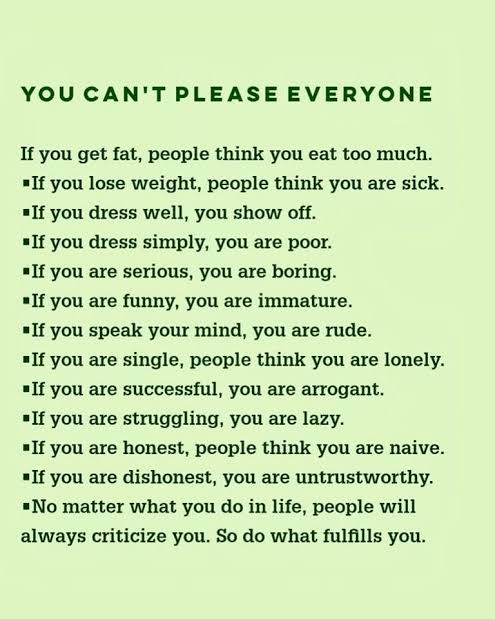
“I don’t want them to think I’m rude.”
“I don’t want her to misunderstand me.”
“What if they think I’m selfish?”
“I should explain myself, otherwise they’ll think I don’t care.”
“I’ll just say yes. I don’t want them to feel bad about me.”
Sounds harmless.
But slowly, this thought can become a rule:
“I must behave in a way that keeps everyone’s opinion of me positive.”
And that rule can quietly take control of your life.
You start editing yourself before anyone even asks you to.
You say yes when you want to say no.
You explain decisions that did not require an explanation.
You apologise when you have done nothing wrong.
You tolerate behaviour you dislike because setting a boundary might make someone uncomfortable.
You change your tone, your choices, your opinions and sometimes even your personality depending on how you imagine other people might perceive you.
And the strangest part?
Most of these reactions are not based on what people actually think. They are based on what you imagine they might think.
This is where you get stuck.
Your mind starts treating someone else’s possible opinion as if it were your responsibility.
Someone might think you’re rude.
So you become extra polite.
Someone might think you’re selfish.
So you over-give.
Someone might think you’re angry.
So you immediately clarify.
Someone might dislike your decision.
So you reconsider it.
Someone might misunderstand you.
So you explain yourself again.
And again.
And again.
Eventually, you are no longer asking:
“What do I actually want to do?”
You are asking:
“What should I do so that nobody thinks badly of me?”
That is a completely different question.
And it can keep you stuck for years.
Here is the cognitive shift you need.
Your job is not to control people’s interpretation of you.
Read that again.
You can communicate clearly.
You can be respectful.
You can act according to your values.
You can take responsibility when you genuinely make a mistake.
But after that, the other person’s interpretation belongs to them.
You cannot enter someone’s mind and edit their perception of you.
And trying to do so will always create a losing game.
Because even if you behave perfectly, someone can still misunderstand you.
Someone can dislike you.
Someone can think you’re arrogant.
Someone can think you’re too quiet.
Someone can think you’re too outspoken.
Someone can think you’re selfish.
Someone can think you’re difficult.
Someone can think you’re wrong.
And none of these thoughts automatically make them true.
You are allowed to be misunderstood.
This is perhaps one of the most uncomfortable forms of emotional freedom.
You don’t have to immediately correct every misunderstanding.
You don’t have to prove that you are a good person.
You don’t have to give a detailed explanation for every decision.
You don’t have to make yourself smaller so that someone else remains comfortable with you.
Sometimes you can simply think:
“They may have misunderstood me. I don’t like that, but I can tolerate it.”
That’s it.
No emergency explanation.
No panic.
No changing your behaviour.
No abandoning your boundary.
No trying to repair an image that may only exist inside your head.
Ask yourself what you are sacrificing to protect your image
Every time you catch yourself thinking:
“What will they think of me?”
add one more question:
“And what am I about to do to prevent them from thinking that?”
You may discover that you are about to:
- say yes when you mean no
- hide your actual opinion
- apologise unnecessarily
- over-explain
- seek reassurance
- avoid a conversation
- tolerate disrespect
- change a perfectly reasonable decision
- suppress your emotions
- behave differently from what feels authentic
Now ask:
“If I didn’t care about controlling their opinion, what would I actually choose?”
That question brings you back to yourself.
Someone else’s disappointment is not automatically your mistake.
This is another distinction we often miss.
You say no.
They feel disappointed.
Your mind says:
“I shouldn’t have said no.”
But why?
Someone experiencing disappointment does not necessarily mean you did something wrong.
You can disappoint someone while still behaving appropriately.
You can make someone uncomfortable while still maintaining a healthy boundary.
You can refuse a request and still be a caring person.
You can disagree with someone and still respect them.
You can choose yourself without becoming selfish.
Their emotional reaction is information—not always an instruction.
Stop making your behaviour a public-relations campaign.
You are not responsible for maintaining a universally positive image of yourself.
Because the moment your self-worth depends on everyone having a good opinion of you, your behaviour becomes controlled by the audience.
You become less interested in:
“Is this right for me?”
and more interested in:
“Will this make me look good?”
That is when people-pleasing becomes exhausting.
Not because you care about people.
But because you have started using other people’s approval as a measurement of whether you are allowed to feel okay about yourself.
The goal is not to stop caring what people think.
That would be unrealistic.
Of course you will care sometimes.
The healthier goal is:
“I can care about what someone thinks without allowing their opinion to control my behaviour.”
That is a completely different level of freedom.
You can hear criticism without immediately changing yourself.
You can be misunderstood without immediately defending yourself.
You can be disliked without immediately fixing it.
You can disappoint someone without assuming you have failed.
You can be judged without putting yourself on trial.
And most importantly:
You can remain the same person even when someone else doesn’t approve of you.
Before changing yourself for someone’s opinion, pause.
Ask yourself:
Did I actually do something wrong?
If yes, take responsibility.
If no, ask:
“Am I correcting my behaviour because it is inconsistent with my values—or because I cannot tolerate someone thinking badly of me?”
That distinction can change everything.
Because if your behaviour is genuinely wrong, change it.
But if your behaviour is perfectly reasonable and you are changing it only to prevent someone’s negative opinion—
you are not solving a problem.
You are teaching your mind:
“Other people’s approval determines what I am allowed to do.”
And the more you obey that rule, the stronger it becomes.
The freedom you are looking for may not be everyone thinking well of you.
It may be reaching a point where you can genuinely say:
“I hope people understand me. But if they don’t, I will still be okay.”
“I hope people like me. But I don’t need to perform for their approval.”
“I will correct myself when I am wrong. I will not change myself simply because someone might judge me.”
Because you cannot control everyone’s opinion.
But you can decide whose opinion gets to control your life.
And that should include yours.
