
Why does growth hurt more than we expect?
~ Jia Gandhi, Intern
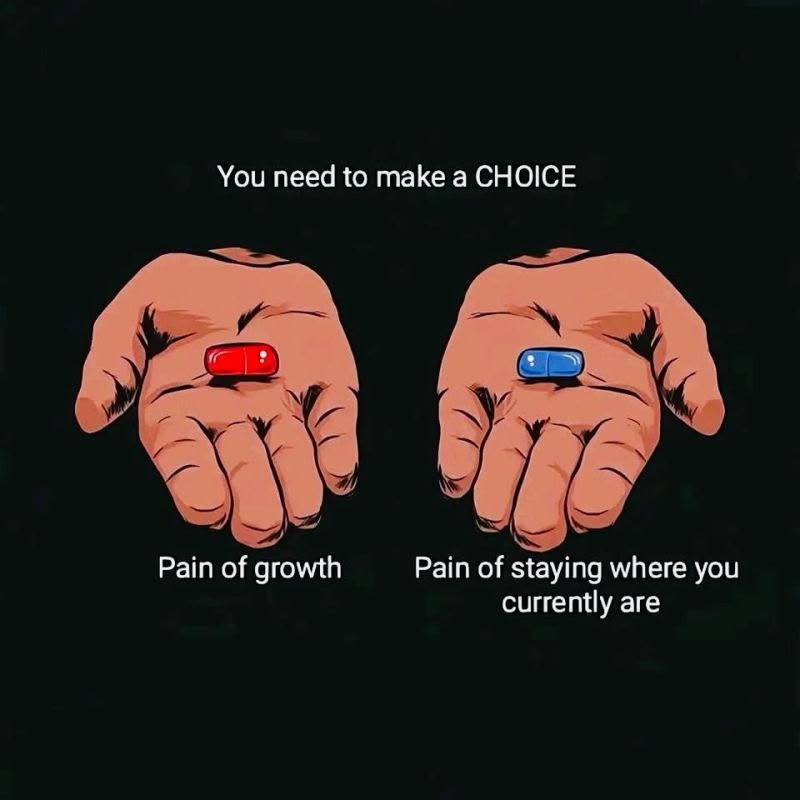
Nobody talks about the grief that comes with growth. Not the kind of grief that comes from losing someone, but the kind that comes from slowly letting go of the version of yourself that spent years trying to keep everyone happy.
We grow up believing that being a good person means saying “yes”, being available, being understanding, keeping the peace, and never disappointing anyone. So the first time you choose yourself, it doesn’t feel empowering, it feels wrong. You say “no” to something you don’t have the energy for, you decide not to explain every decision you make, you stop apologising for things that were never your fault, you finally choose your peace over everyone’s approval. And instead of feeling proud, you feel guilty.
You wonder if you’ve become selfish, you replay conversations in your head, you think about sending another message just to make sure nobody is upset with you, you almost go back to the version of yourself that everyone found easier to love. Not because that version was happier, but because it was familiar. That’s the part of growth nobody prepares us for.
It doesn’t just ask you to change your habits, it asks you to disappoint the expectations people had of you, and sometimes, even your own expectations as the people around you may not always understand your boundaries. Someone who was used to unlimited access to your time may call you distant, someone who benefited from your silence may suddenly have a problem with your honesty, someone who loved the version of you that never said “no” may struggle with the version that finally does. That doesn’t automatically make them bad people, but it also doesn’t mean your growth is wrong.
The truth is, growth changes relationships. Not because you stop caring, but because you stop abandoning yourself just to make everyone else comfortable and that’s uncomfortable for everyone including you.
Have you ever noticed how guilt shows up the moment you choose yourself? You finally decide to rest instead of overworking. You don’t answer a message immediately because you’re emotionally drained. You decline an invitation because you genuinely need a quiet evening. Nothing dramatic happens, and yet somehow, you spend the rest of the day wondering if you’re a bad person.
That’s how deeply many of us have confused self-sacrifice with kindness. Our minds naturally hold on to what feels familiar, even when those patterns leave us emotionally exhausted. Change brings uncertainty, and uncertainty often feels uncomfortable. That’s why growth can come with guilt, hesitation, self-doubt, or the urge to go back to old habits. These feelings aren’t proof that you’re making the wrong choice, they’re often part of learning a healthier way of living. So if growth feels heavy right now, don’t rush to believe you’re failing. Maybe you’re simply outgrowing a version of yourself that survived by putting everyone else’s needs before your own, and maybe that’s something worth being proud of.
If these feelings feel overwhelming or difficult to navigate alone, remember that you don’t have to figure them out by yourself. Psychology helps us understand the patterns behind our thoughts, emotions, and behaviours, while therapy provides a safe space to explore them without judgment.
Sometimes, the greatest growth doesn’t come from having all the answers, it comes from giving yourself permission to ask for help because the goal of growth was never to become someone that everyone approves of, it was to become someone who no longer has to apologise for being themselves.
