
By Neha Juneja
Therapist | Mental Health Professional
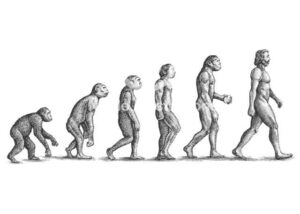
At first glance, it may seem strange that more stories today revolve around humans turning into animals, societies collapsing, survival battles, disappearing resources, or people questioning the meaning of existence. But this isn’t a coincidence. These themes are becoming increasingly common because they reflect what many people are unconsciously experiencing in the modern world.
Psychologists have long suggested that fiction does more than entertain us—it gives us a safe space to process emotions that are difficult to express in everyday life. The stories we create often mirror the fears, conflicts, and questions society is struggling with.
Survival Stories Reflect Our Brain’s Ancient Survival System
Our brains evolved in environments where survival depended on constantly detecting danger. Although modern life is safer than life thousands of years ago, our nervous system still reacts strongly to threats.
Today, instead of wild animals, people face different threats:
- Climate change
- Economic uncertainty
- Wars and political instability
- Artificial intelligence replacing jobs
- Pandemics
- Rising living costs
- Resource shortages
Research in evolutionary psychology shows that uncertain environments automatically activate the brain’s threat-detection system. This makes stories about survival, escaping danger, and adapting to harsh environments feel emotionally compelling.
These stories are not creating fear—they are speaking to fears that already exist.
Why Are Humans Turning Into Animals in Stories?
Across cultures, animals have always represented instincts that humans try to control.
When characters slowly become wolves, insects, monsters, or other creatures, psychology often interprets this as a metaphor rather than a literal transformation.
It may symbolize:
- Losing control over emotions
- Returning to basic survival instincts
- Feeling disconnected from society
- Becoming someone you no longer recognize
- Conflict between civilized behavior and primitive instincts
Swiss psychiatrist Carl Gustav Jung described this through the concept of the “Shadow”—the hidden parts of ourselves that society teaches us to suppress. Fiction allows these hidden parts to appear symbolically.
In many transformation stories, the real conflict is not becoming an animal. The real conflict is asking:
“What part of myself have I ignored?”
Why Existential Stories Feel So Relevant Today
Many people are no longer asking only,
“How do I survive?”
They are asking,
“Why am I doing all of this?”
This shift is called an existential crisis.
Research suggests existential concerns become stronger during periods of uncertainty, major life changes, social isolation, or rapid technological change.
Common thoughts include:
- “What is my purpose?”
- “Does my work matter?”
- “Am I living my own life or someone else’s?”
- “Who am I without my achievements?”
Movies and series that explore identity, purpose, and the meaning of being human resonate because they mirror these universal psychological questions.
Why Resource Scarcity Dominates Modern Stories
Notice how many recent stories involve:
- Food shortages
- Water scarcity
- Limited energy
- Collapsing governments
- Survival communities
These themes mirror real-world concerns.
Behavioral research consistently finds that when people perceive resources as limited, even temporarily, they become more vigilant, competitive, and emotionally reactive. Scarcity doesn’t only affect material decisions—it changes attention, memory, emotional regulation, and long-term planning.
Our brains naturally become fascinated by stories that simulate these situations because they allow us to mentally rehearse survival strategies without experiencing real danger.
Why Our Brain Enjoys Watching These Stories
Interestingly, many people report feeling emotionally satisfied after watching survival films—even when the stories are stressful.
This happens because fiction creates a psychological “safe simulation.”
The brain can experience:
- fear,
- uncertainty,
- problem-solving,
- cooperation,
- resilience,
while knowing that we remain physically safe.
Researchers in cognitive psychology suggest that storytelling may function as a mental rehearsal system, allowing people to explore difficult scenarios, practice emotional regulation, and imagine adaptive responses in a low-risk environment.
These Stories Are Really About Being Human
Whether someone transforms into an animal…
Whether civilization collapses…
Whether people fight over the last remaining resources…
The deepest psychological question usually remains the same:
“Who am I when everything familiar is taken away?”
That question lies at the heart of many modern stories because identity is being challenged more rapidly today than at almost any other time in history.
The Takeaway
The growing popularity of survival stories, human-animal transformations, existential crises, and resource scarcity does not mean society is becoming psychologically unhealthy.
In many ways, it reflects something entirely normal.
Throughout history, stories have evolved alongside human concerns. As the world changes, our fiction changes too.
Today’s narratives reveal a society trying to understand uncertainty, identity, adaptation, and resilience.
Rather than seeing these themes as signs that something is wrong, psychologists often view them as cultural mirrors—stories that help us explore fears, instincts, and questions that many people share but rarely discuss openly.
In that sense, these stories are not predicting the future.
They are helping us make sense of the present.
