
The Boy Who Couldn’t Sit Still And The Girl Who Couldn’t Stop Overthinking
~ Jiya Chopra, Intern
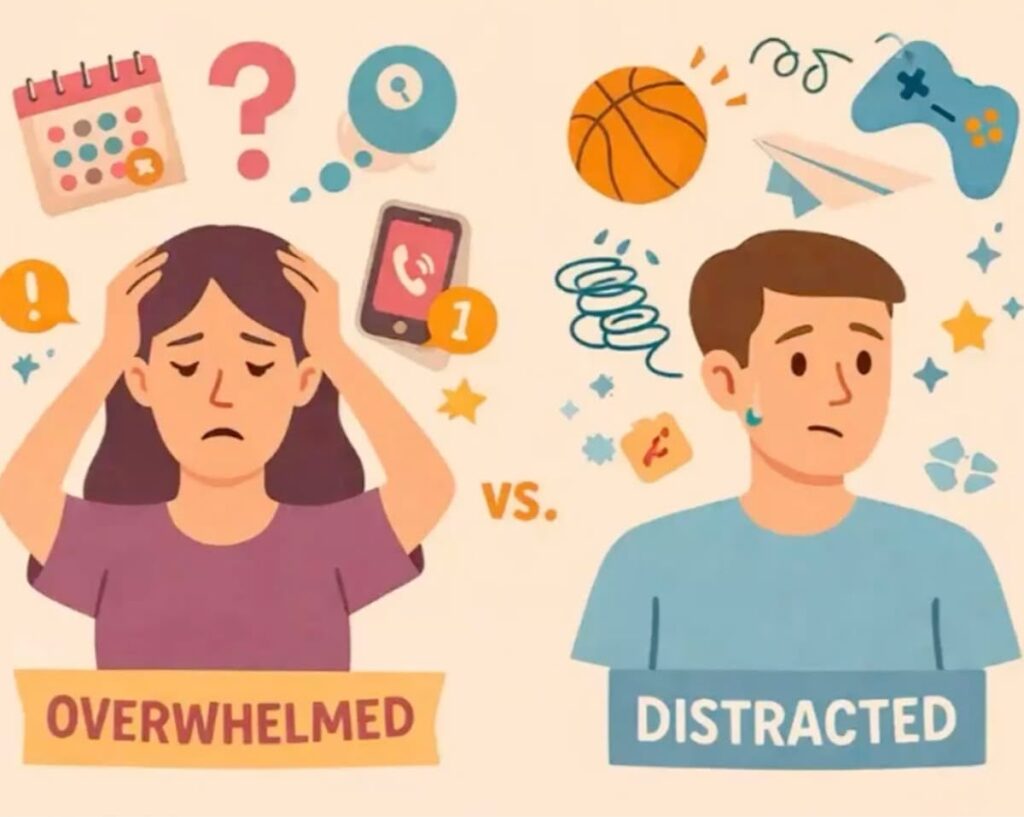
How do we define a “well-behaved” child in a typical Indian setting? Probably, the one who respects all elders and obeys every rule set upon them. But what about the boy who kept running around the entire house and wouldn’t even listen to the teachers in the school? Or what about the girl who kept quiet the whole time but zoned out and never followed any instruction? Is this an example of misbehaviour or can it be better understood through another lens? Probably a more compassionate one.
What is the trajectory of life for these individuals who were labelled “mischievous”, “lazy”, or “has more unused potential”? This misunderstood bunch of people struggle with various aspects of life that most people find extremely easy. They may struggle with following deadlines, time management, sitting at one place for longer durations, following instructions, paying close attention to detail and many more. Due to their inability to pay attention or being still, or sometimes even both, these individuals face major challenges in their academic life, professional life, interpersonal relationships and even social circles. Such individuals are more prone to develop anxiety and depression. They may also feel isolated, or consider themselves separate from society because of their differences.
They are the early signs of neurodevelopment disorder, Attention Deficit Hyperactivity Disorder (ADHD). However, presence of these symptoms does not necessarily indicate a diagnosis and a licensed psychologist’s consultation is required.
Focusing on the socio-cultural factors involved in such behaviors present that the manifestation varies in males and females. Males tend to be more hyperactive and females tend to be more inattentive. When researchers studied this difference, their studies found the reason behind this is the societal expectation placed on males and females from their childhood. In a generalised sense, males are allowed to be loud and disruptive as the behavior is socially acceptable from them. On the other hand, females are generally taught to behave in a certain manner and present themselves in a more disciplined way. This leads to more internalised stress causing inattentiveness and other factors such as being overthinking, zoning out, emotional disturbances, etc. The male counterparts experience more external manifestations of impulsivity, disruptive behaviors, restlessness, etc. Despite these generalisations, not all men would be hyperactive and not all women would be inattentive, as ultimately individual differences play a major role. Not everyone experiences the same gender roles. Variance in cultural values are also implicated.
Individuals struggling sometimes overcompensate for their shortcomings and may end up feeling exhausted. For example, a person struggling with time management might spend hours making endless schedules and to-do lists and try to organise their life repetitively. This might lead to burnout. There would be individuals who would still struggle with time management even after so much planning because initiating a task feels impossible. This might eventually lead to feelings of worthlessness, low self-esteem and confidence.
Lack of awareness leads to social exclusion. Therefore, psychoeducation is necessary to understand what aspects might require attention and psychological support from professionals. We, as individuals, need to make sure that we understand how individual differences should be perceived for ourselves and for others around us.
Disclaimer: This article does not contain any diagnostic criteria for any disorder. Self-diagnosis cannot be done on the basis of this. If this feels familiar, please consult a professional.
