
~ Shreya Madwal, Intern
From a psychological standpoint, all emotions are essential as they help cope with specific situations, and ignore them at your peril. If someone is sad, it means they have experienced a loss, and if someone is afraid, that person is in danger or feels threatened. The same goes for anger and other emotions; ignoring them will not make them disappear but cause harm in the long run. However, emotional suppression has been linked to various negative consequences, including poor mental health and damaged relationships. Thus, emotional regulation is the solution, and it begins with accepting the fact that emotions are transient. Optimism is not the same as toxic positivity, which is basically a refusal to accept life as it is. The difference between the two concepts is that optimism refers to a general tendency to believe that circumstances will evolve for the better, whereas toxic positivity is a dysfunctional approach to reality.
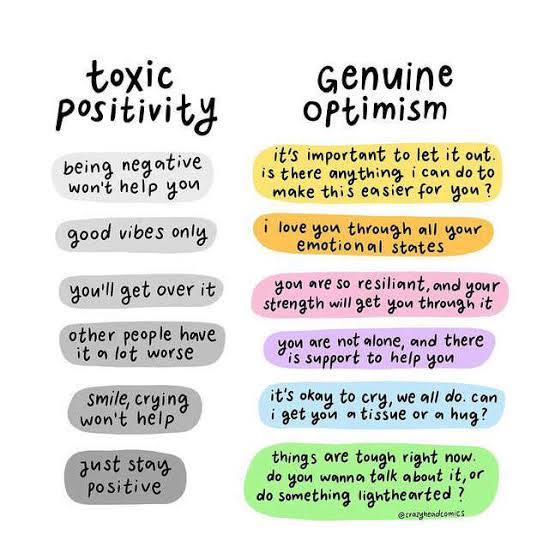
For instance, one might respond to a poor exam result with a statement such as “I am disappointed, but I will review the material and do better next time.” In contrast, optimism would entail asserting something like “It is not a problem; everything is perfect” when faced with a similar situation. Toxic positivity is prevalent in modern society, fueled by the popularity of social media and the unrealistic need to portray a perfect image at all times. People tend to share only the best outcomes, and this creates an illusion that everyone is always successful and never faces any difficulties. As such, society becomes accustomed to seeing flawless images, stories, and videos, which can lead to toxic positivity. In its turn, this ideology can be harmful because it ignores people’s emotions and suppresses them, thus fueling psychological issues. However, psychology does not advocate for toxic positivity since life is full of challenges, and there is no point in pretending that they do not exist. Instead, one should embrace real optimism, which entails being emotionally strong and resilient despite the adversity.
Healthy optimism comes down to realistic thinking, emotional regulation, and social support. It also means being nonjudgmental, compassionate, and mindful. In realistic thinking, the emphasis is on taking control of the situations and outcomes one can manage and leaving alone those that are beyond one’s control. Moreover, social support is paramount in developing healthy optimism, and it refers to seeking help from trusted people when needed. In addition, emotional regulation is key in managing emotions in a productive manner as opposed to suppressing or denying them. Lastly, compassion allows for a non-judgmental attitude toward oneself and others and the ability to move forward despite failures.
Ultimately, positivity is most beneficial when it is authentic rather than imposed. Encouraging individuals to suppress their emotions in the name of positivity may provide temporary comfort but can hinder emotional processing in the long term. Genuine optimism empowers people to face adversity with courage, resilience, and realistic hope, whereas toxic positivity asks them to ignore reality altogether. Recognizing this distinction can foster healthier conversations about mental health and create environments where individuals feel safe expressing both their strengths and their struggles.
