
Grow Through What You Go Through: Finding Growth Without Romanticising Pain
By Neha Juneja
Therapist | Mental Health Professional
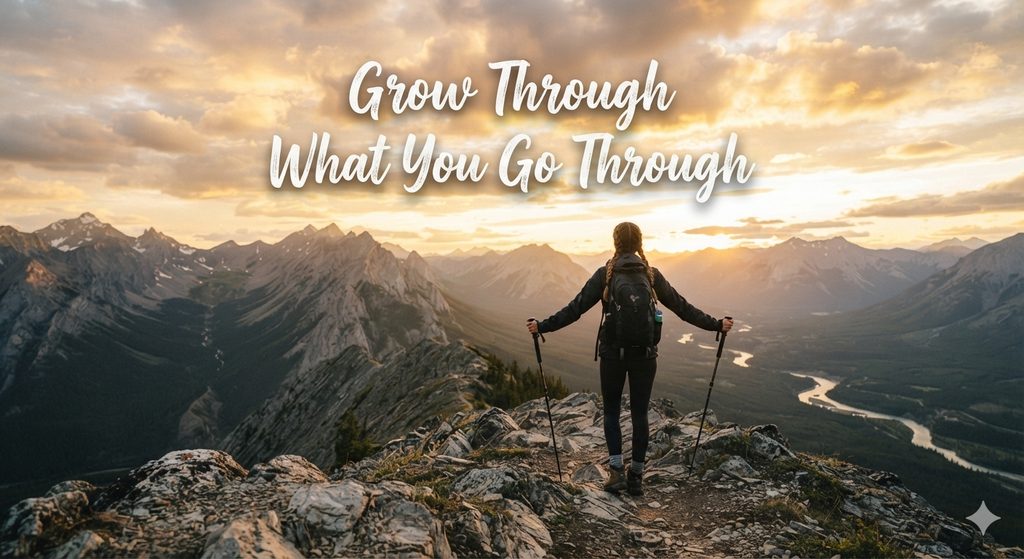
“Grow through what you go through” sounds simple, but living through difficult experiences rarely is.
There are moments when life does not look like the plan we had imagined. A relationship ends. A career opportunity does not work out. We experience rejection, failure, grief, uncertainty, loneliness, or a version of ourselves that we no longer recognise.
During such moments, people often hear advice like “Everything happens for a reason” or “This will make you stronger.” Although these statements may be well-intentioned, they can sometimes feel invalidating.
Because the truth is: pain does not automatically make us stronger.
Growth is not something that suffering guarantees. It is something that may emerge when a person is given enough safety, support, reflection, and time to process what they have experienced.
What Does “Growing Through” Really Mean?
Growing through an experience does not mean pretending that it was good for you.
It does not mean being grateful for rejection, excusing someone’s behaviour because it “taught you a lesson,” or forcing yourself to find a positive meaning while you are still hurting.
Instead, growth can mean gradually developing a different relationship with your experience.
You may begin to understand yourself better.
You may recognise boundaries you previously ignored.
You may become more aware of your emotional needs.
You may discover strengths you did not know you possessed.
Or perhaps you simply learn that you can experience difficult emotions without being completely defined by them.
Growth is not about changing the past. It is about changing what you carry forward from it.
Pain and Growth Can Exist Together
One of the most important things to understand about psychological growth is that growth does not cancel pain.
A person can become more resilient and still have difficult days.
Someone can become more confident and still experience self-doubt.
A person can heal from an experience and still feel sad when they remember it.
This is particularly important because social media often presents healing as a straight line:
Pain → Healing → Happiness
Real psychological recovery is rarely that neat.
It may look more like:
Pain → confusion → understanding → setbacks → adaptation → growth → difficult days → continued growth.
Having a difficult day does not mean you have returned to the beginning.
The Psychology Behind Growth After Adversity
Psychologists have studied how some individuals report positive psychological changes following significant adversity. One concept associated with this is post-traumatic growth.
Post-traumatic growth refers to positive changes that can occur following the struggle with highly challenging life circumstances. Researchers have described growth across areas such as:
- Greater appreciation of life
- Deeper or more meaningful relationships
- Recognition of personal strength
- Development of new possibilities or directions
- Changes in spiritual or existential perspectives
However, an important distinction is often missed:
Post-traumatic growth is not the same as resilience, recovery, or simply “becoming stronger.”
And it certainly does not mean that trauma was beneficial.
The growth occurs through the individual’s struggle to process and adapt to the experience, not because suffering itself is inherently valuable.
Sometimes Growth Looks Very Small
We often imagine growth as something dramatic.
Starting a new career.
Becoming extremely confident.
Achieving a major goal.
Transforming your entire life.
But psychological growth can be much quieter.
Sometimes growth looks like:
“I said no this time.”
“I asked for help instead of pretending I was fine.”
“I realised I don’t have to prove my worth to everyone.”
“I noticed my thought instead of immediately believing it.”
“I rested without feeling guilty.”
“I stopped returning to something that repeatedly hurt me.”
These may look like small decisions from the outside.
Psychologically, they can represent significant changes in self-awareness, boundaries, emotional regulation, and behaviour.
You Don’t Have to Find a Lesson Immediately
There is no deadline for finding meaning in what happened to you.
Sometimes the first step is simply acknowledging:
“This hurt me.”
Before asking “What did this teach me?”, it may be more appropriate to ask:
- What am I feeling?
- What happened?
- What do I need right now?
- What part of this experience is still difficult for me?
- What support would help me process this?
- What can I control today?
Meaning can come later.
Trying to force a positive interpretation too early can sometimes become another way of avoiding painful emotions.
Healing requires emotional processing—not emotional bypassing.
Growth Is Not the Same as “Getting Over It”
We often use phrases such as “move on” or “get over it” as though emotional experiences have an expiry date.
But psychological adjustment is more nuanced.
Moving forward does not necessarily mean forgetting.
It can mean remembering without being controlled by the memory.
It can mean acknowledging what happened without allowing it to define your entire identity.
It can mean carrying the experience as part of your story rather than allowing it to become the whole story.
Your difficult experience may be a chapter of your life without becoming the title of your life.
What Can Help You Grow Through Difficult Experiences?
1. Allow the emotion to exist
You do not have to immediately replace sadness with positivity.
Emotions provide information. Allowing yourself to acknowledge them can be an important part of processing an experience.
2. Separate the event from your identity
Something happened to you.
That does not automatically tell you who you are.
“I failed at something” is different from “I am a failure.”
“This relationship ended” is different from “I am unlovable.”
The distinction matters.
3. Examine the story you are telling yourself
After difficult experiences, our minds often create conclusions:
“Nothing ever works for me.”
“I am not good enough.”
“Everyone eventually leaves.”
These thoughts can feel like facts because they emerge during emotionally intense periods.
Try asking:
“Is this what happened—or is this what I have concluded about myself because of what happened?”
4. Identify what is within your control
You cannot always control what happened.
You may not control another person’s decision, a rejection, an unexpected event, or the past.
But you can gradually influence what you do next.
Sometimes recovery begins by shifting from:
“Why did this happen to me?”
to:
“Given that this has happened, what do I need now?”
5. Let support be part of the process
Growth does not have to happen alone.
Trusted relationships, supportive environments, and professional psychological help can provide space to process experiences that feel difficult to understand independently.
Seeking help is not evidence that you are weak.
Sometimes it is evidence that you are willing to understand yourself more deeply.
And What If You Don’t Feel Like You’re Growing?
That’s okay too.
There may be periods when your only achievement is getting through the day.
You do not have to turn every painful experience into a life lesson.
Sometimes survival comes before growth.
Sometimes rest comes before rebuilding.
Sometimes healing means simply creating enough safety to feel what you have been trying not to feel.
You are not failing at healing because you are still struggling.
Grow Through It—But At Your Own Pace
Perhaps the most compassionate interpretation of “grow through what you go through” is not:
“This happened, so become stronger.”
It is:
“This happened. It hurt. And with time, support, reflection, and self-compassion, I can decide what I want to carry forward from it.”
You don’t have to be grateful for everything that hurt you.
You don’t have to find a lesson in every loss.
You don’t have to become a completely different person.
Sometimes growth is simply becoming more aware, more compassionate toward yourself, more intentional about your choices, and more capable of living according to what matters to you.
Your experiences shape your story.
But they do not have to write the ending.
Grow through what you go through—not because the pain was necessary, but because your life can continue to hold meaning beyond it.
