
~ Shreya Madhwal, Intern
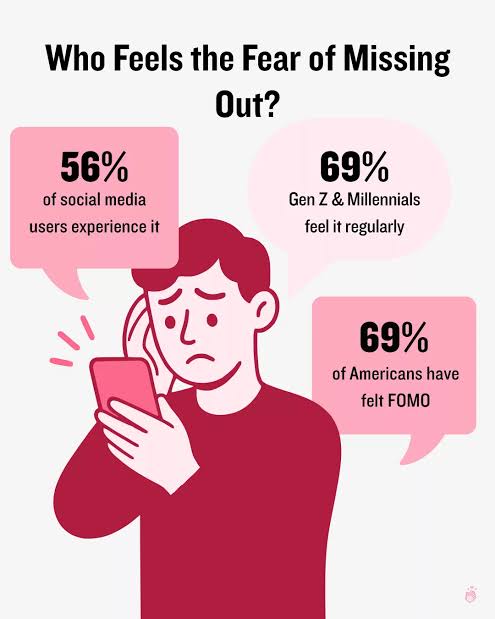
Have you ever opened Instagram to check one notification and found yourself scrolling for an hour? Or seen pictures of friends hanging out and suddenly felt like you were missing something fun, even though you were just fine a moment before?
If this sounds familiar, you’re not alone.
This feeling is called Fear of Missing Out, or FOMO.
It’s the anxiety that others are having enjoyable experiences without us. In today’s social media-driven world, FOMO is especially common among young adults. The term FOMO was first explored by psychologist Andrew Przybylski and his team. They described it as the worry that we’re missing out on rewarding experiences that others are having. When people experience FOMO, they often feel the urge to stay constantly connected to what everyone else is doing. This can lead to frequently checking social media, texts, and notifications, even when there’s no real reason to. A major reason FOMO has become widespread is social media.
Platforms like Instagram, Snapchat, and TikTok showcase the highlights of people’s lives like vacations, big achievements, and celebrations while we hardly see the plain, everyday moments. As a result, it’s easy to compare our daily lives to someone else’s “best parts.”
According to the American Psychological Association, comparing ourselves to others is a natural tendency, but seeing idealized content online can lead to feelings of dissatisfaction and loneliness. FOMO is also tied to our basic human need to connect with others. When we feel left out, it can make us feel lonely and anxious. Missing an invitation or seeing friends together can hit harder than we expect.
While feeling FOMO is common, it can negatively impact our mental health if it becomes too overwhelming. Research shows that high levels of FOMO can lead to increased stress and anxiety, lower life satisfaction, trouble sleeping, and even more time spent on social media. Constantly checking our phones can distract us from paying attention to our studies, work, or conversations with those around us. Instead of enjoying the present moment, we find ourselves preoccupied with what we might be missing. The good news is that we can manage FOMO.
One effective strategy is practicing mindfulness, which means being present and aware of what’s happening without judgment. Mindfulness helps us focus on where we are instead of worrying about what others are doing. Setting limits on screen time, taking breaks from social media, and remembering that people often share only the best moments of their lives can help reduce feelings of FOMO. Spending quality time with friends and family in real life is another great way to stay connected. Some people find it useful to shift from FOMO to JOMO, which stands for Joy of Missing Out. JOMO is about enjoying the present moment, free from the pressure of keeping up with everything online.
It encourages us to value our own time and experiences instead of feeling like we need to be involved in everything. Choosing to unplug occasionally isn’t missing out; it’s about recharging and focusing on what truly matters. In conclusion, FOMO is a normal feeling that has become more common due to social media. Our desire to belong and stay connected can sometimes lead to anxiety about missing experiences.
However, understanding where FOMO comes from can help us manage it better. By practicing mindfulness, reducing unnecessary social media use, and appreciating our own experiences, we can shift our focus from worrying about what we’re missing to enjoying the life we have.
