
~ Jia Gandhi, Intern
We often believe that happiness comes from eliminating stress, anxiety, sadness, or fear. As a result, many of us spend a significant amount of time trying to avoid uncomfortable thoughts and emotions. While this may provide temporary relief, it often makes emotional struggles even stronger over time. Acceptance and Commitment Therapy (ACT), developed by psychologist Steven C. Hayes in the 1980s, offers a different perspective. Instead of encouraging people to fight their internal experiences, ACT teaches them to accept these experiences while committing to actions that align with their personal values (Hayes et al., 1999). At its core, ACT is based on the idea of psychological flexibility, which is the ability to stay present, openly experience thoughts and emotions without being overwhelmed by them, and continue moving toward what truly matters. Psychological flexibility has consistently been associated with better mental health, resilience, and overall well-being (Kashdan & Rottenberg, 2010).
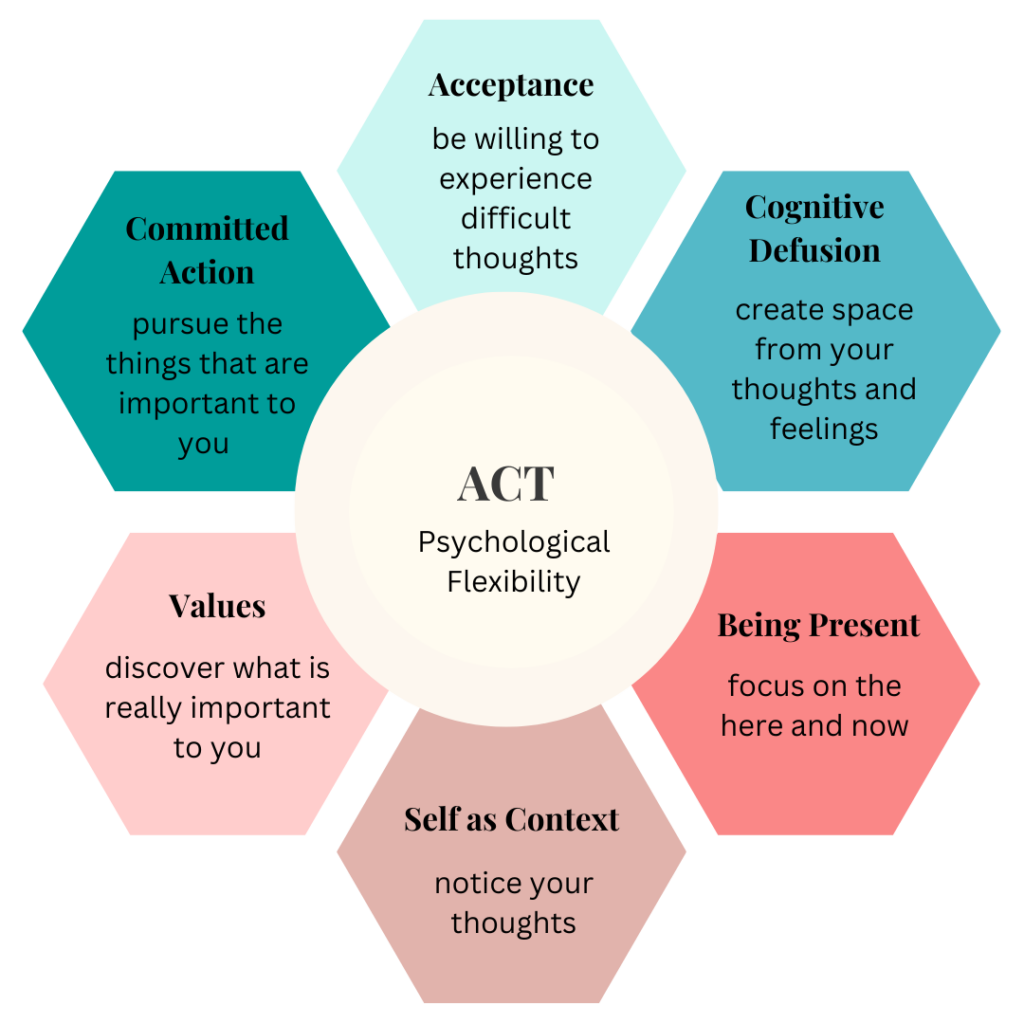
ACT reminds us that emotional pain is a natural part of being human, but suffering often increases when we struggle against that pain. One of the greatest misconceptions about ACT is that acceptance means giving up or tolerating unhealthy situations. In reality, acceptance means making space for difficult emotions rather than constantly battling them. For example, a person experiencing anxiety before an important presentation may never completely eliminate the anxiety. Instead of waiting to feel fearless, ACT encourages them to acknowledge the anxiety, carry it with them, and still deliver the presentation because it aligns with their value of personal growth or professional excellence.
ACT is built around six interconnected core processes. These include acceptance, where individuals learn to make room for difficult emotions; cognitive defusion, which teaches people to observe thoughts without treating them as absolute truths; being present, or practising mindful awareness of the current moment; self-as-context, which helps individuals recognize that they are more than their thoughts and emotions; values clarification, where they identify what genuinely matters to them; and committed action, which involves taking meaningful steps guided by those values despite emotional discomfort (Hayes et al., 2012). Unlike therapies that primarily focus on changing the content of thoughts, ACT focuses on changing the relationship individuals have with those thoughts. For instance, instead of believing the thought, “I am a failure,” a person learns to notice, “I am having the thought that I am a failure.”
This subtle shift reduces the power of negative thinking and creates space for healthier choices. Similarly, mindfulness exercises in ACT help individuals observe emotions with curiosity rather than judgment, reducing emotional avoidance. Research has shown ACT to be effective across a wide range of psychological difficulties, including anxiety disorders, depression, obsessive-compulsive disorder (OCD), chronic pain, substance use disorders, and workplace stress. Meta-analyses indicate that ACT produces significant improvements in psychological functioning and quality of life while increasing psychological flexibility (A-Tjak et al., 2015). Because of its transdiagnostic approach, ACT is increasingly being integrated into healthcare, educational settings, and organizational well-being programs.
Acceptance and Commitment Therapy ultimately teaches an empowering lesson: we do not need to wait for life to become perfect before living it fully. Difficult thoughts and emotions may continue to appear, but they no longer have to dictate our choices. By accepting what is beyond our control and committing to actions guided by our deepest values, ACT helps individuals build a richer, more meaningful, and psychologically flexible life. Rather than asking, “How can I stop feeling this way?” ACT encourages a more transformative question: “How can I live the life I value, even while feeling this way?” That shift often becomes the beginning of lasting psychological growth.
