
Anxious and Avoidant Partners: Why We Push Away the People We Want to Feel Close To
By Neha Juneja | Psychologist & Mental Health Professional
When Two People Love Each Other but Struggle to Feel Secure Together
Have you ever been in a relationship where you wanted more closeness, but your partner seemed to need more space? The more you tried to talk, understand, or resolve things, the more distant they became. And the more distant they became, the harder it felt to stop reaching out.
Perhaps you wanted reassurance that everything was okay, while your partner wanted time alone. You wanted to discuss an argument immediately, while they preferred to withdraw. You interpreted their silence as rejection, while they experienced your repeated questions as pressure.
Eventually, both of you felt misunderstood.
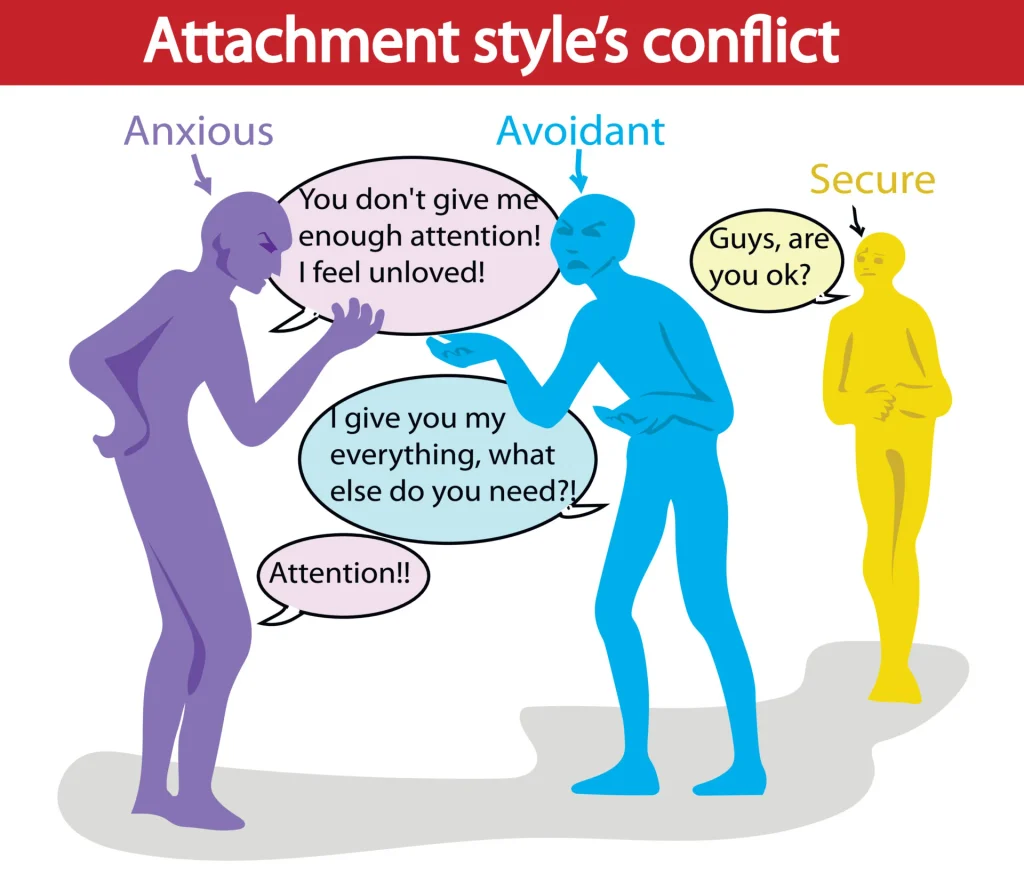
One person felt unwanted. The other felt overwhelmed. One kept reaching out, hoping to restore the connection. The other pulled away, hoping to escape the emotional intensity.
This pattern is often described as the anxious–avoidant relationship dynamic.
It can occur when one partner tends to respond to relationship uncertainty by seeking closeness and reassurance, while the other tends to respond to emotional discomfort by creating distance.
But here is something important to understand: the problem is not necessarily that one person loves too much and the other loves too little. Sometimes, two people have learned very different ways of protecting themselves when a relationship feels emotionally unsafe.
Understanding these patterns can be the first step towards building a healthier relationship.
1. What Is an Anxious Attachment Pattern?
A person with anxious attachment tendencies may experience uncertainty in a relationship as a threat to emotional security.
A delayed reply, a change in tone, a cancelled plan, or an emotionally distant conversation may trigger questions such as:
- Are they losing interest in me?
- Did I do something wrong?
- Are they upset with me?
- What if they leave me?
- Why do I feel that something is wrong when they say everything is fine?
- If I stop trying, will this relationship fall apart?
These thoughts may create an urgent need to restore closeness.
The person may repeatedly seek reassurance, analyse conversations, ask whether their partner is upset, or struggle to focus on anything else until the relationship feels secure again.
Sometimes, they know that asking the same question again will not give them lasting relief. Yet the anxiety returns, and they feel compelled to ask once more.
For example, imagine that your partner replies to your message after several hours.
You know they may be busy, but your mind begins constructing explanations. You check when they were last online, reread your previous conversation, and wonder whether you said something wrong.
When your partner finally replies, you feel relieved. But the relief may not last. The next delay creates the same uncertainty again.
Over time, reassurance can become a repeated attempt to eliminate the discomfort of not knowing.
What is happening underneath?
Often, the deeper fear is not simply about a delayed message. It is about what that delay appears to mean.
A thought such as “They haven’t replied” may quickly become “They don’t care about me,” followed by “I am going to lose them.”
The emotional response may therefore be much stronger than the immediate situation appears to warrant.
This does not mean that the person’s feelings are fake or unreasonable. It means that the present situation may be activating a deeper fear of rejection, abandonment, or disconnection.
The therapeutic goal is not to make the person stop caring. It is to help them experience uncertainty without feeling compelled to resolve it immediately.
2. What Is an Avoidant Attachment Pattern?
A person with avoidant attachment tendencies may experience emotional closeness, dependence, or relationship conflict as overwhelming.
They may value relationships deeply while finding it difficult to express vulnerability, depend on someone emotionally, or remain engaged during intense conversations.
When conflict arises, they may withdraw, become quiet, change the subject, focus on practical solutions, or ask to be left alone.
Their internal experience might sound like:
- Why does every conversation have to become so emotional?
- Why can’t we leave this issue alone?
- I need some space to think.
- I cannot deal with this right now.
- Whatever I say will make things worse.
- I feel like I am losing control of my own space.
Sometimes, distance becomes a way of regulating emotions.
For example, after an argument, one partner wants to discuss everything immediately. The other feels emotionally overloaded and stops responding.
The withdrawing partner may believe they are preventing the situation from escalating. However, the partner seeking connection may interpret that withdrawal as indifference, rejection, or a sign that the relationship is ending.
The more the anxious partner pursues a conversation, the more overwhelmed the avoidant partner may feel. The more the avoidant partner withdraws, the more threatened the anxious partner may become.
What is happening underneath?
For some people, emotional distance offers a sense of control and safety.
They may have learned that expressing needs leads to disappointment, that vulnerability makes them feel exposed, or that depending on someone creates the possibility of being hurt.
Consequently, they may find it easier to manage distress privately than to communicate it within the relationship.
However, needing space is not automatically avoidant attachment. People can need solitude, have different communication preferences, or take time to process emotions without having an attachment difficulty.
The important distinction is whether distance is communicated respectfully and followed by reconnection, or whether it repeatedly becomes a way of avoiding necessary conversations and leaving the other person in uncertainty.
3. The Anxious–Avoidant Cycle: How Two People Trigger Each Other
One of the most painful aspects of this dynamic is that both partners may unintentionally reinforce the behaviour they fear.
Consider this example.
Step 1: Something creates uncertainty.
One partner notices that the other has been unusually quiet.
The anxious partner begins wondering whether something is wrong and asks, “Are you upset with me?”
Step 2: Reassurance does not fully resolve the fear.
The avoidant partner says, “No, nothing is wrong.”
However, the anxious partner still senses distance and asks again. They want to feel certain that the relationship is okay.
Step 3: The avoidant partner begins feeling pressured.
The repeated questions become frustrating. The avoidant partner feels that their answer is not being trusted and withdraws from the conversation.
Step 4: The anxious partner interprets withdrawal as rejection.
The silence seems to confirm the original fear. They ask more questions, send additional messages, or try harder to restore contact.
Step 5: The avoidant partner withdraws further.
Feeling overwhelmed, they stop responding or ask to be left alone without explaining when they will return to the conversation.
Step 6: Both partners feel emotionally unsafe.
The anxious partner feels abandoned. The avoidant partner feels trapped.
Each person’s attempt to protect themselves intensifies the other person’s distress.
This is how the cycle becomes self-reinforcing.
The anxious partner pursues connection to reduce the fear of losing the relationship. The avoidant partner creates distance to reduce the discomfort of emotional intensity. Unfortunately, each response may produce precisely the outcome the other person fears.
The cycle, rather than either partner’s personality alone, becomes the central problem.
Of course, this pattern does not occur in every anxious–avoidant relationship, and attachment tendencies can vary across relationships and situations.
4. Why Does This Dynamic Feel So Difficult to Leave?
A relationship marked by repeated closeness and distance can become emotionally exhausting.
Periods of connection may feel deeply reassuring, especially after a period of uncertainty. When distance returns, the contrast can make the relationship feel even more unpredictable.
A person may begin focusing intensely on restoring the closeness they experienced earlier.
They might think:
“If we can just get back to how things were, everything will be okay.”
They may spend considerable time trying to understand their partner’s behaviour, choosing the right words, preventing conflict, or figuring out how to ask for reassurance without appearing needy.
Meanwhile, the withdrawing partner may feel that every disagreement threatens their independence or peace.
Both partners can become increasingly preoccupied with managing the relationship rather than experiencing it.
When love becomes a search for certainty
For the anxious partner, love may gradually become associated with monitoring changes, anticipating rejection, and repeatedly checking whether the relationship is secure.
For the avoidant partner, love may gradually become associated with pressure, difficult conversations, and the fear that closeness will require giving up personal space.
Neither experience necessarily reflects what the relationship could be under healthier conditions.
However, love alone does not automatically resolve these patterns.
A relationship can contain genuine affection and still involve communication difficulties, incompatible needs, repeated hurt, or insufficient emotional safety.
Understanding why a pattern occurs can help explain it. It does not mean either partner must accept it indefinitely.
5. How the Anxious Partner Can Begin to Change
The goal is not to become emotionally detached, stop expressing needs, or pretend that uncertainty does not matter.
The goal is to develop the ability to respond to anxiety without allowing it to dictate every action.
A. Learn to recognise the trigger
When anxiety appears, pause before acting on it.
Ask yourself:
- What exactly happened?
- What meaning am I assigning to it?
- What am I afraid this situation means?
- What do I know, and what am I assuming?
- Am I responding to the present situation or to a familiar fear?
For example:
Event: My partner has not replied for three hours.
Interpretation: They are losing interest in me.
Fear: I will be abandoned.
Alternative possibility: They may be busy, unavailable, or unable to respond at the moment. I do not yet know what the delay means.
The purpose is not to force yourself to believe the most positive explanation. It is to recognise that a feared interpretation is not automatically a fact.
B. Practise tolerating uncertainty
You may want to ask another question, send another message, or check whether your partner is online.
Before doing so, notice the urge.
Ask yourself whether the action is necessary for communication or whether it is an attempt to make anxiety disappear immediately.
If it is reassurance-seeking, experiment with allowing the discomfort to remain for a short period without acting on the urge.
Return to your own activity, notice the thoughts without repeatedly analysing them, and allow the feeling to rise and fall naturally.
You do not have to feel completely calm before continuing with your day.
The aim is to learn that uncertainty can be uncomfortable without requiring an immediate response.
C. Communicate needs without abandoning yourself
It is reasonable to want consistency, affection, and communication.
Instead of repeatedly asking, “Are you sure everything is okay?” try expressing the underlying need clearly.
For example:
“I feel disconnected when we stop communicating after an argument. I understand that you may need time to process things. Can we agree to let each other know when we need a break and when we will reconnect?”
This allows you to express a genuine need without trying to control your partner’s immediate emotional response.
Remember that learning to self-regulate does not mean learning to tolerate chronic neglect or disrespect.
6. How the Avoidant Partner Can Begin to Change
The goal is not to eliminate the need for personal space or force yourself into conversations before you are ready.
It is to learn how to take space without making the relationship feel unpredictable or emotionally unsafe.
A. Recognise when you are withdrawing
Ask yourself:
- Do I need time to process this conversation, or am I trying to escape the discomfort?
- Am I afraid that expressing my feelings will make me vulnerable?
- Do I interpret every emotional conversation as a demand?
- Am I avoiding the conversation because I do not know what to say?
- What would help me remain present without feeling overwhelmed?
These questions can help distinguish a genuine need for a pause from a habitual pattern of disengagement.
B. Take space while maintaining connection
You do not have to resolve every disagreement immediately.
However, withdrawing without explanation can leave your partner uncertain about what is happening.
Instead of disappearing or saying, “Leave me alone,” try communicating the need for a break.
For example:
“I am feeling overwhelmed, and I need some time to process what we have discussed. I am not ready to continue this conversation right now. Can we talk again this evening at 7?”
Only offer a specific time if you genuinely intend to return to the conversation. If you need longer, communicate that rather than leaving your partner to guess.
The objective is to create space without abandoning the responsibility to reconnect.
C. Practise emotional expression in manageable steps
You do not have to share every thought or feeling at once.
Begin by communicating simple, honest statements:
“I am finding this conversation difficult.”
“I care about resolving this, but I need a little time.”
“I am not ignoring you. I am trying to understand what I feel.”
Small moments of emotional honesty can gradually make vulnerability feel more manageable.
The important part is learning that you can remain connected to someone without surrendering your independence.
7. What Both Partners Need to Understand
An anxious–avoidant relationship cannot become healthier if only one partner is expected to change.
The anxious partner cannot be responsible for managing both people’s emotions, and the avoidant partner cannot expect the relationship to function without difficult conversations.
Both partners have responsibilities.
| The anxious partner can practise | The avoidant partner can practise |
|---|---|
| Pausing before repeatedly seeking reassurance | Communicating before taking space |
| Distinguishing fears from observable facts | Recognising emotional discomfort without immediately withdrawing |
| Expressing needs clearly rather than testing the relationship | Listening without treating every concern as criticism |
| Maintaining personal interests and routines | Returning to difficult conversations as agreed |
| Accepting that uncertainty is part of relationships | Accepting that emotional intimacy involves some vulnerability |
Together, partners can work towards:
- Communicating expectations around availability and personal space.
- Discussing conflict when both are sufficiently regulated.
- Making specific agreements rather than relying on assumptions.
- Taking responsibility for the impact of their behaviour.
- Repairing misunderstandings instead of allowing them to accumulate.
- Building trust through consistent actions rather than repeated promises.
These changes require practice. Understanding attachment theory is useful, but awareness alone does not guarantee behavioural change.
8. How to Know Whether the Relationship Is Becoming Healthier
Progress does not necessarily mean that one partner stops feeling anxious or the other never needs space.
Progress means that both people become better able to respond to these experiences without repeating the same painful cycle.
You may begin to notice that:
- A delayed reply no longer automatically becomes evidence of rejection.
- One partner can request reassurance without demanding an immediate resolution to every fear.
- The other can request space without disappearing or refusing to reconnect.
- Disagreements become easier to discuss.
- Both partners can acknowledge their contribution to a conflict.
- Boundaries are respected without being interpreted automatically as rejection.
- Apologies are followed by observable changes in behaviour.
- Both people feel increasingly able to express needs, preferences, and concerns.
Most importantly, emotional security begins to depend less on constantly managing each other’s reactions and more on developing trust, communication, consistency, and individual emotional regulation.
A crucial distinction: Attachment patterns do not excuse harmful behaviour
Attachment theory can help explain why someone withdraws, seeks reassurance, or struggles with vulnerability. It should not be used to justify repeated disrespect, manipulation, intimidation, controlling behaviour, or emotional abuse.
Not every distant partner has avoidant attachment, and not every anxious partner is responding only to an internal fear.
Sometimes anxiety reflects genuine inconsistency in the relationship. Sometimes a need for distance reflects a legitimate boundary or a mismatch in relationship expectations.
The aim is not to label one person as the problem. It is to understand the relationship accurately, including whether both partners are willing and able to build a healthier dynamic.
9. When Can Therapy Help?
Sometimes, partners understand the pattern intellectually but struggle to change it when emotions become intense.
The anxious partner may know that repeatedly seeking reassurance is not helping, yet feel overwhelmed when uncertainty appears.
The avoidant partner may genuinely want a healthy relationship, yet find themselves withdrawing whenever difficult emotions arise.
In such situations, therapy can help individuals identify the experiences, beliefs, emotional responses, and behaviours that maintain the cycle.
Individual therapy may help someone develop emotional regulation, work through fears of rejection or vulnerability, and build healthier relationship patterns.
Couples therapy may help partners identify their interaction cycle, communicate more effectively, negotiate boundaries, and practise repairing conflict.
The appropriate approach depends on the couple’s circumstances, each person’s willingness to participate, and whether the relationship is safe. Where there is abuse, coercion, or fear of retaliation, individual support and safety planning may be more appropriate than joint therapy.
Therapy is not about teaching one partner to become less needy so the other can remain distant. Nor is it about forcing someone who needs space to become constantly available.
It is about helping people develop the capacity to maintain both emotional connection and individual autonomy.
10. Final Reflection: Are You Protecting Yourself or Protecting Your Fear?
Sometimes, the anxious partner is not simply asking for reassurance. They are trying to feel safe enough to stop anticipating rejection.
Sometimes, the avoidant partner is not simply asking for space. They are trying to feel safe enough to remain emotionally present.
Both may be protecting themselves from a feared experience. Yet their protective responses can unintentionally create more of the distance, uncertainty, and disconnection they are trying to avoid.
A useful question for either partner is:
“When I react this way, am I moving towards the relationship I want, or am I trying to escape a feeling I do not know how to manage?”
You do not have to blame yourself for the patterns you have learned. They may have developed for understandable reasons.
But understanding where a pattern comes from is only the beginning. You can also learn to recognise when it no longer serves you and practise responding differently.
A healthier relationship does not require two people to have identical emotional needs. It requires two people who are willing to understand those differences, communicate their needs honestly, respect boundaries, and take responsibility for their behaviour.
You can need closeness without losing yourself.
You can need space without shutting someone out.
And you can learn to build a relationship in which neither person has to choose between emotional connection and personal safety.
