
Why Do We Create Scenarios That Never Happen?
~ Prabhgun kaur, Intern
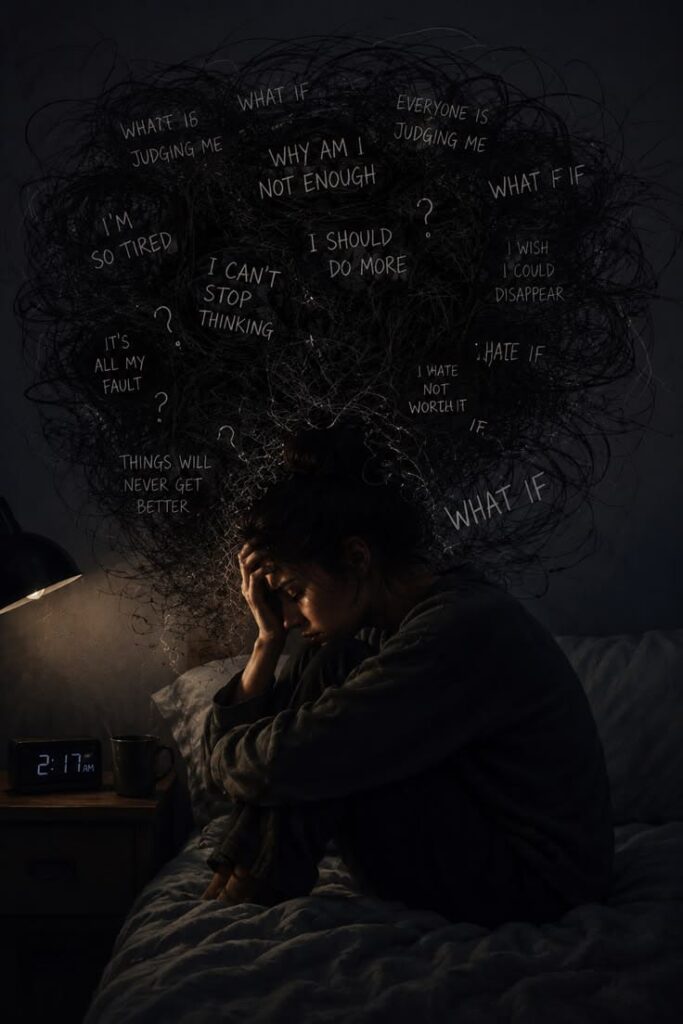
Have you ever had an entire conversation inside your head… only to realize it never actually happened?
Maybe you imagined the perfect comeback after an argument. Maybe you convinced yourself someone was upset with you just because they replied with a short text. Or perhaps, before walking into a room, you had already imagined everyone judging you.
The strange thing is that these moments can feel so real that our heart reacts as if they’re actually happening.
But here’s the truth:
Most of the stories our minds create never happen.
If you’ve ever found yourself worrying about situations that only existed in your imagination, you’re not alone. It’s something almost everyone experiences.
Our minds are natural storytellers. Sometimes they create hopeful stories about our dream career, the perfect relationship, or a future where everything works out. Other times, they create stories filled with fear, rejection, embarrassment, and self-doubt.
The problem isn’t imagination itself. The problem is forgetting the difference between imagination and reality.
Think about your first day at a new college or workplace. Before you’ve even entered the room, your mind has already imagined every possible outcome.
“What if nobody talks to me?”
“What if I embarrass myself?”
“What if they don’t like me?”
By the time you arrive, you’ve already lived through dozens of imaginary situations that never happened.
The same thing happens in everyday life. A friend replies with just “Okay,” and suddenly your mind starts filling in the blanks.
“Did I do something wrong?”
“Are they angry?”
Hours later, they reply again saying they were simply busy.
All that anxiety came from a story your mind created—not from reality.
We do this because our brain is designed to predict what might happen. Thousands of years ago, imagining danger helped humans survive. Today, our brain uses that same system to prepare us for emotional pain.
It thinks, “If I expect the worst, maybe it won’t hurt as much.”
The intention is to protect us.
But sometimes, it protects us from things that were never going to happen in the first place.
Our imagination can also comfort us. We imagine our future, our goals, and the life we dream of. There’s nothing wrong with that. Dreams inspire us to grow.
The problem begins when we become so attached to imaginary moments that we stop appreciating the real ones happening around us.
So, how do we stop getting trapped inside these stories?
Start by asking yourself one simple question:
“Is this actually happening, or is my mind filling in the blanks?”
That single question can bring you back to the present.
Then focus on facts instead of assumptions. If someone hasn’t replied to your message, the only fact is that they haven’t replied. Everything else—“They’re ignoring me,” “They’re upset,” “I ruined everything”—is just a story your mind is trying to complete.
Whenever you notice yourself lost in endless “what ifs,” gently shift your attention to something real. Go for a walk, write in a journal, listen to music, or spend time with someone you trust. The present may not be as dramatic as the stories in your head, but it’s the only place where life is actually happening.
Creating imaginary scenarios doesn’t mean you’re weak or an overthinker. It simply means you’re human. Our minds naturally try to make sense of uncertainty by filling in the blanks.
But remember this:
Not every thought deserves your attention.
Some thoughts are facts.
Many are just stories.
So the next time your mind starts writing a scenario that hasn’t happened yet, pause for a moment.
Take a deep breath.
Look around.
Because while you’re busy living inside an imaginary story, real life—with all its unexpected beauty—is quietly unfolding right in front of you.
