
Why Can’t We Stop Using Alcohol and Other Substances?
~ Jiya Chopra, Intern
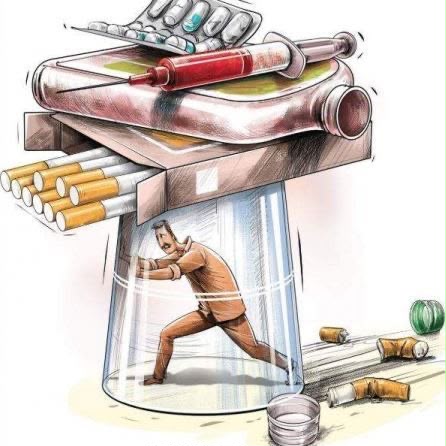
We believe addiction begins when an individual loses control over their impulses and engages in regular consumption. Contrary to popular belief, the roots of addiction are implanted into our minds the very first time we try any substance. Most common forms of substance use that turns into substance abuse are drinking alcohol, nicotine and smoking weed (derived from cannabis). The curiosity of young adults lead them towards these substances to “just try once” but it might end up ruining their lives as well as the people around them. Many people also fall into these habits because of their tough life situations, as these substances can provide immediate and temporary relief, however, causing long-term damage to the individual’s brain as well as their personality.
Now, the question comes- “why exactly is it so difficult to stop using substances?” There are certain brain pathways which get activated the moment alcohol and other substances are introduced in our system. These pathways help us feel positive emotions during the time we are intoxicated which makes us want to engage in it more frequently. You must have noticed that each time you consume a certain amount, you need a little more than the previous amount to experience the same feeling of “rush”. This is called developing tolerance. Most people take pride in having a higher tolerance, however, it only implies how much closer they are to getting addicted.
Most people experience cravings for using substances in the presence of certain people, certain places or even things. For example, an individual smokes a cigarette everyday with a colleague, so whenever they meet or even see this particular colleague, they would feel the urge to smoke cigarettes. This occurs through associating the particular colleague with cigarettes. Even individuals smoking at a certain time everyday would feel compelled to smoke at that particular time no matter what place they are in. This is also why weekends are associated with drinking by many people.
The life stressors are increasing when work load, interpersonal relationships, any mental health condition, or environmental factors all come together. The feeling of relief one experiences after smoking keeps reinforcing the behavior, which makes it almost impossible to quit smoking. Certain memories can also trigger the urge to drink. You must have noticed the type of songs you listen to while drinking later remind you of how you felt while you were drunk, thus reinforcing the urge again.
These mechanisms cannot be overpowered just through “willingness” to abstain from the substance as it overlaps with multiple facets of our lives. Resistance towards substance is not enough, it also requires resisting the factors which previously reinforced this behavior. This is the problem many individuals face while staying clean and it leads to relapse. Occurrence of an unexpected cue can disturb the recovery and also have major psychological impacts. Addiction is a disease, not a mindset. It has to be dealt with extreme compassion and understanding by the therapist as well as family caregivers. It is highly important to know what reinforcing factors the individual has faced and how to particularly deal with them in order to ultimately tackle addiction. It is not impossible. We just have to find the right way
