
AI vs Humans: Can We Sustain Our Advantage in the Age of Artificial Intelligence?
~ Shreya Madhwal, Intern
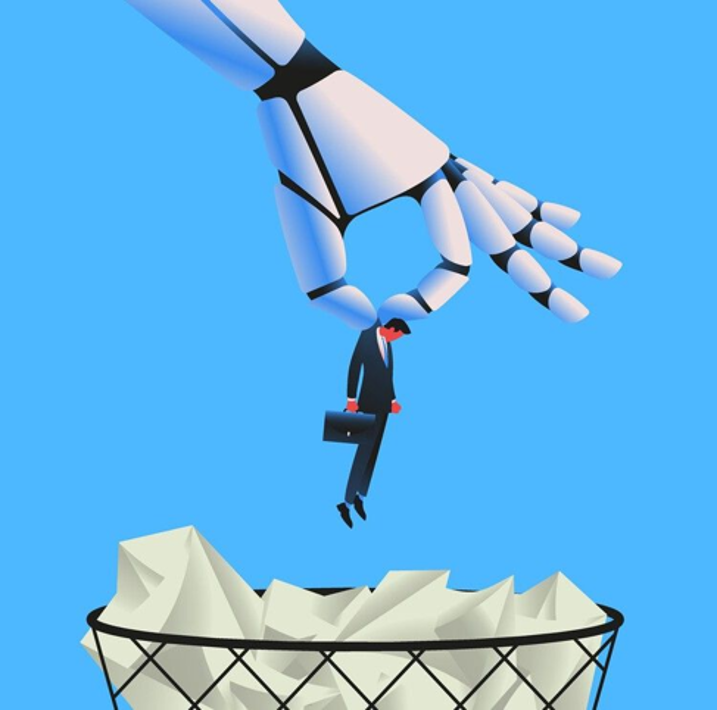
Artificial Intelligence (AI) is no longer a distant technological concept; it has already been woven into the fabric of our daily lives. From curating entertainment options on streaming services to addressing customer inquiries and evaluating job applications, AI has subtly become an integral part of various industries. Within workplaces, particularly in the domain of Human Resources (HR), AI assists organizations in drafting job descriptions, screening résumés, scheduling interviews, and automating administrative tasks. These innovations are time-saving and enhance operational efficiency, rendering AI an appealing resource for employers.
Nonetheless, each technological revolution presents its own challenges. While AI generates new opportunities, it concurrently displaces numerous positions characterized by repetitive, predictable, or data-driven tasks. Roles such as administrative assistants, data entry operators, customer service representatives, recruiters, and even entry-level analysts are witnessing significant automation of their responsibilities. According to estimates by the World Economic Forum, while AI is poised to create millions of jobs, it will also lead to the displacement of millions of existing roles in the coming years. This situation confronts many individuals with an uncertain future in which the skills they once relied upon may become outdated.
The ramifications of job displacement extend beyond mere financial considerations. Employment encompasses more than a paycheck; it confers identity, purpose, stability, and a sense of belonging. When individuals suddenly lose their positions to technological advancements, they often endure emotional responses akin to grief. Common experiences during this period include anxiety, self-doubt, helplessness, and uncertainty. Research has demonstrated a correlation between unemployment and heightened levels of depression, chronic stress, diminished self-esteem, and lowered life satisfaction. The apprehension of becoming “replaceable” can induce persistent psychological pressure, affecting even those who remain employed.
Young professionals are especially susceptible to this growing sense of uncertainty. Many students invest years in preparation for careers, only to find that certain roles are rapidly evolving or vanishing altogether. This phenomenon has given rise to what experts term “AI anxiety,” characterized by the fear that technology may render one’s education, skills, or profession irrelevant. Continuous media coverage of automation and layoffs can exacerbate feelings of stress, burnout, sleep disturbances, and hopelessness. Instead of contemplating, “What career do I desire?”Many young adults are now questioning, “Will this career even exist in a decade?”
Nevertheless, this narrative does not signify an endpoint. Historically, every significant technological progression, from the Industrial Revolution to the advent of computers, has transformed the nature of work. Although certain jobs have diminished, new opportunities have emerged that require distinct skills. AI is likely to follow this established pattern. Rather than competing with AI in areas where it excels, humans can concentrate on the attributes that technology cannot easily replicate.
What, then, provides humans with a competitive advantage?
Firstly, emotional intelligence is a vital asset. While AI can identify patterns in data, it lacks the capacity to genuinely empathize with an individual in mourning, motivate a struggling learner, or cultivate trust in meaningful relationships. Skills such as empathy, compassion, active listening, and emotional comprehension remain uniquely human and are crucial in fields like psychology, healthcare, education, leadership, and counseling.
Secondly, creativity is another distinct advantage. While AI can generate content based on existing information, humans possess the ability to imagine, innovate, and concoct original ideas by synthesizing personal experiences, emotions, and cultural insights. Whether it involves designing a marketing campaign, authoring a novel, addressing complex social issues, or inventing new products, creativity continues to represent one of humanity’s greatest strengths.
Additionally, critical thinking is an increasingly valuable competency. Although AI can supply information almost instantaneously, it may not discern the ethical, biased, or contextually appropriate nature of that information. Humans bear the responsibility of posing questions, making moral choices, evaluating evidence, and contemplating the broader implications of their decisions. These higher-order thinking skills are proving more essential than ever.
Finally, the most significant advantage humans possess is the capacity for learning and adaptation. Those who will thrive in the future are not necessarily those with the highest academic qualifications, but rather those who demonstrate a willingness to continuously acquire new skills. Enhancing digital literacy, understanding AI functionalities, improving communication abilities, learning to collaborate with technology, and embracing a philosophy of lifelong learning will enable individuals to maintain their relevance in an evolving job market.
The future is not framed as a contest between AI and humans; rather, it is a partnership between AI and humans. Artificial intelligence serves as a formidable tool, yet it still requires human judgment, ethical reasoning, creativity, and emotional understanding. Instead of fearing AI, we should strive to enhance the skills that distinguish us as uniquely human. While technology may alter the landscape of work, intrinsic qualities such as empathy, resilience, curiosity, adaptability, and innovation remain invulnerable to automation.
