
By Neha Juneja
Therapist | Mental Health Professional
“Why did she react like that?”
“He said he was fine, but something felt off.”
“How can two people experience the same situation so differently?”
Every day, we try to understand what other people are thinking, feeling, or intending. We guess why someone smiled, why they stayed silent, or why they behaved in a certain way.This ability is so automatic that we rarely stop to think about it.
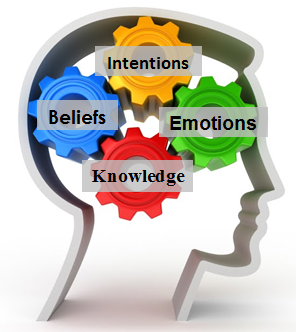
In psychology, this skill is called Theory of Mind—the ability to recognize that other people have their own thoughts, emotions, beliefs, intentions, and perspectives that may be completely different from our own.It is one of the most important psychological abilities because it forms the foundation of empathy, communication, healthy relationships, and social understanding.
What Is Theory of Mind?
Theory of Mind is the ability to understand that every person has an independent mind.This means recognizing that:- Other people may think differently than you.- They may feel differently about the same event.- They may know something you don’t—or not know something that you do.- Their behaviour is influenced by their own experiences, beliefs, and emotions.Simply put, Theory of Mind helps us step outside our own perspective and imagine what might be happening in someone else’s mind.
Why Is Theory of Mind Important?
Without Theory of Mind, social interactions become difficult.We may assume:-
Everyone thinks like us.
Others should react exactly as we would.
If someone behaves differently, they must be wrong, rude, or uncaring.
However, people experience the world through different personalities, childhood experiences, cultures, beliefs, and emotional histories.Understanding this reduces misunderstandings and improves relationships.
Theory of Mind Develops During Childhood
Children are not born fully understanding that other people have different minds.This ability develops gradually.
For example, a young child may assume that everyone knows what they know.As they grow, they begin to understand that another person can have different information, different beliefs, and different emotions.This developmental milestone usually becomes stronger between 4 and 5 years of age, although it continues to mature throughout adolescence as social experiences become more complex.
What Happens When We Struggle With Theory of Mind?
Everyone occasionally misjudges another person’s thoughts or intentions.However, when Theory of Mind is limited, people may experience difficulties such as:
Jumping to conclusions : Instead of asking why someone behaved a certain way, they immediately assume the worst.”She didn’t reply because she doesn’t care about me.”In reality, there may be many possible explanations.
Misunderstanding other people’s emotions : Someone may expect others to react exactly as they would. For example:”If I wouldn’t be upset about this, why is she crying?” This overlooks the fact that every person’s emotional experiences are different.
Taking things personally : Without considering another person’s perspective, neutral situations can feel like personal rejection.A cancelled plan may immediately be interpreted as,”They don’t value me.”rather than considering that the other person may genuinely have had an emergency.
Difficulty resolving conflicts : Healthy conflict resolution requires understanding not only your own feelings but also the other person’s perspective.Without this ability, disagreements often become arguments about who is “right” instead of understanding why each person reacted differently.
Theory of Mind Is Not the Same as Empathy
These two concepts are closely related but different.Theory of Mind is understanding what another person may be thinking or feeling. Empathy is emotionally connecting with those feelings.
For example: A psychologist may recognize that a client is feeling ashamed even if the client hasn’t said it aloud. This demonstrates Theory of Mind.
Responding with warmth, understanding, and compassion demonstrates empathy.
In other words,Theory of Mind helps us understand another person’s inner world.
Empathy helps us respond to that understanding with care.
A Case Example : Imagine two colleagues leave the same meeting.One appears unusually quiet.Rahul immediately thinks,”He’s upset with me.”He spends the rest of the day feeling anxious. Another colleague pauses before making assumptions.She considers several possibilities.
“Maybe he’s stressed about work.”
“Perhaps something happened at home.”
“He could simply be tired.”
Later, they discover he had received worrying news about a family member before the meeting.The difference wasn’t intelligence.It was the willingness to recognize that another person’s behaviour could be explained by experiences that had nothing to do with them.That is Theory of Mind in action.-
Can Theory of Mind Be Improved?
Yes. Like many psychological skills, it becomes stronger with conscious practice.Helpful ways to strengthen it include:-
Becoming curious instead of making quick assumptions.
Asking questions before reaching conclusions.
Remembering that your perspective is only one possible perspective.
Listening to understand rather than listening to respond.
Considering how another person’s life experiences may influence their behaviour.
These habits help us become more flexible thinkers and improve our relationships.
Final Thought
One of the biggest mistakes we make is believing that other people see the world exactly as we do.They don’t.Every person carries a different history, different beliefs, different fears, different hopes, and different ways of interpreting the same situation.
Theory of Mind reminds us that behaviour is rarely the whole story.When we become curious about another person’s inner world instead of assuming we already know it, we communicate better, judge less, and build healthier, more meaningful relationships.
