
~ Shreya Madhwal, Intern
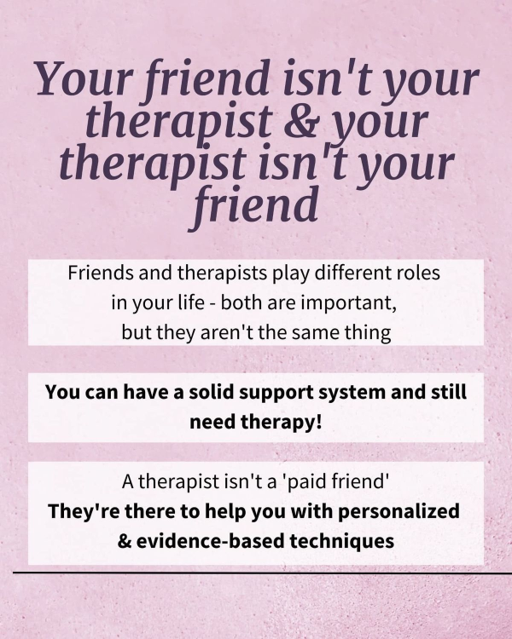
Have you ever heard someone say, “Why should I go to therapy when I can just talk to my best friend?” This is a common belief, especially among younger people. While chatting with friends can be comforting and supportive, it’s not the same as going to therapy. Friends provide care and understanding, but therapists are trained professionals who know how to help people tackle mental health issues. Both friendships and therapy are important, but they serve different purposes.
Good friendships are vital for our mental well-being. Research shows that having strong social connections can help lower stress, boost our mood, and protect against mental health challenges. Friends are there to listen, encourage us, and help us feel less isolated during tough times. Sharing our feelings with someone we trust can offer temporary relief and comfort.
However, therapy goes beyond just talking. Therapists use proven methods to help people with their mental health. They study human behavior, emotions, and mental health issues extensively. Using techniques grounded in research, they help clients recognize negative thought patterns, manage their feelings, solve problems, and develop healthier ways to cope. Therapy is structured and planned; unlike everyday conversations we have with friends.
One big difference between friends and therapists is their level of training. Friends often share advice based on their own experiences, which can be helpful but may not always be the best way to support someone with anxiety, depression, or trauma. Therapists, however, have spent years learning about psychology and counseling techniques. They know how to assess issues carefully and provide treatment based on solid research.
Another key difference is that therapists maintain professional boundaries and ensure confidentiality. Friends can become emotionally involved, which may cloud their judgment or lead to exhaustion in difficult conversations. On the other hand, therapists create a safe, confidential environment where clients can openly share their thoughts and feelings without fear of being judged.
Therapy is also focused on long-term personal growth rather than just providing comfort in the moment. In therapy, clients work with their therapist to identify goals, uncover the roots of their problems, and learn practical skills to enhance their mental health.
While friends offer support, they may not have the knowledge or experience to provide this kind of structured help.
That said, friends play an important role in our lives. They can encourage us to seek professional help, remind us we’re not alone, and support us throughout our healing journey. Therapy and friendship are not alternatives; they complement each other. Friends provide emotional support, while therapists guide us with their expertise.
In conclusion, talking to a friend can help us feel valued and understood, but it cannot replace the benefits of therapy. Therapists are specially trained to address mental health concerns, and they use effective methods while maintaining professional boundaries. Both friends and therapists contribute to our emotional well-being, but they do so in different ways. Seeking therapy isn’t a sign of weakness; it’s a positive step toward understanding ourselves, learning healthy coping skills, and improving our mental health.
