
~ By Shreya Madhwal, Intern
Mental health disorders can significantly impact individuals’ cognitive, emotional, and behavioral functioning in everyday life. Certain individuals experience exceptionally intense emotions that prove challenging to regulate, often resulting in relational difficulties, impulsive behaviors, or self-injurious actions.
Dialectical Behaviour Therapy (DBT) is a form of psychotherapy specifically designed to assist individuals in understanding and managing these emotional challenges. It equips clients with practical skills aimed at regulating emotions, coping with stress, and fostering healthier interpersonal relationships (National Institute of Mental Health, Psychotherapies). The National Institute of Mental Health (NIMH) categorizes DBT as a variant of cognitive-behavioral therapy that was initially developed for the treatment of borderline personality disorder (BPD). Presently, its applicability has expanded to encompass a diverse range of psychological issues, including severe emotional distress, suicidal ideation, self-harming behaviors, as well as conditions such as depression, anxiety, eating disorders, and substance use disorders.
The primary objective of DBT is to facilitate individuals’ acceptance of their current experiences while simultaneously promoting positive behavioral changes (National Institute of Mental Health, Psychotherapies). The term “dialectical” signifies the integration of two seemingly opposing concepts. Within the context of DBT, these concepts are acceptance and change. Clients are encouraged to embrace their thoughts, emotions, and experiences non-judgmentally while striving to amend detrimental or maladaptive behaviors. This emphasis on achieving a harmonious balance between acceptance and change distinguishes DBT from other therapeutic modalities (National Institute of Mental Health, Psychotherapies).
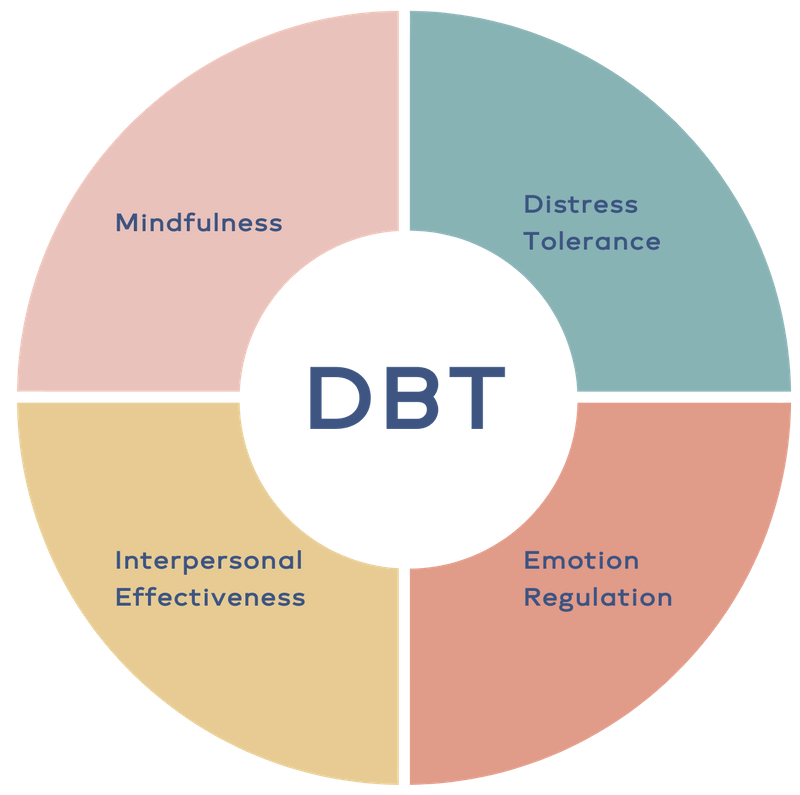
DBT is structured around four fundamental skill areas. The first, mindfulness, cultivates an individual’s awareness of the present moment without self-judgment. The second, distress tolerance, imparts healthy coping mechanisms for managing difficult circumstances, thereby mitigating impulsive reactions. The third, emotion regulation, aids individuals in comprehending and managing their intense emotional states. Finally, interpersonal effectiveness enhances communication skills, fosters the maintenance of healthy relationships, and instructs individuals in the respectful expression of personal needs (National Institute of Mental Health, Psychotherapies).
A comprehensive DBT program typically integrates individual therapy sessions with group skills training. In individualized sessions, therapists support clients in recognizing personal challenges and applying DBT strategies to real-life situations. Group sessions facilitate the learning and practice of the core skills among peers who confront similar difficulties. Clients are encouraged to practice these skills in their daily lives between sessions, thereby enhancing their implementation in practical contexts (National Institute of Mental Health, Psychotherapies). The NIMH asserts that psychotherapy, including DBT, facilitates the development of healthier coping strategies, enhances emotional regulation, and diminishes behaviors that disrupt daily functioning. Empirical research underscores the efficacy of DBT, particularly for individuals grappling with intense emotions, recurrent self-harming actions, or suicidality. Through the acquisition of tangible coping skills and support from qualified professionals, many individuals experience improvements in their quality of life and forge healthier relationships (National Institute of Mental Health, Psychotherapies).
In summary, Dialectical Behaviour Therapy represents an evidence-based therapeutic approach that aids individuals in managing profound emotions and fostering healthier cognitive and behavioral patterns. By amalgamating acceptance with the pursuit of positive change, DBT provides vital skills such as mindfulness, emotional regulation, distress tolerance, and effective communication. These competencies not only enhance mental health but also equip individuals to confront future challenges with increased confidence, thereby positioning DBT as a pivotal methodology in contemporary psychological treatment (National Institute of Mental Health, Psychotherapies).
