
~ By Shreya Madhwal, Intern
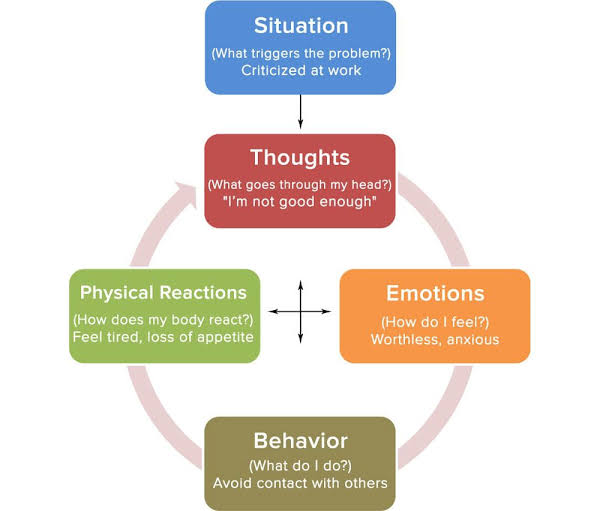
Mental health holds equivalent significance to physical health, with a substantial number of individuals encountering issues such as stress, anxiety, or depression at various stages of their lives. One of the most efficacious interventions for these challenges is Cognitive Behavioural Therapy (CBT). CBT, a form of psychotherapy, operates under the premise that an individual’s thoughts, feelings, and behaviours are interconnected. This therapeutic approach equips individuals with practical strategies to navigate emotional difficulties and enhance their overall psychological well-being (National Health Service, 2024).
According to the National Health Service (NHS), CBT is predicated on the understanding that cognitive processes significantly influence emotional states and behavioural responses. Often, individuals may develop negative or maladaptive thought patterns that exacerbate their emotional distress or hinder problem-solving capabilities. CBT facilitates the identification of such detrimental cognitions, promoting the substitution of these with more realistic and constructive thoughts, thereby enabling individuals to respond to situations in a healthier and more balanced manner (NHS – Cognitive Behavioural Therapy).
CBT is employed to address a wide array of mental and physical health conditions. It is frequently indicated for disorders such as depression, various anxiety disorders, obsessive-compulsive disorder (OCD), post-traumatic stress disorder (PTSD), eating disorders, and certain personality disorders. Furthermore, it demonstrates utility in assisting individuals in managing chronic health conditions, including chronic pain, insomnia, irritable bowel syndrome (IBS), and chronic fatigue syndrome (CFS). Consequently, CBT has emerged as one of the most widely utilized psychological modalities across the globe (NHS – Cognitive Behavioural Therapy). During CBT sessions, the therapist and the client collaboratively explore the client’s difficulties. The therapist fosters an environment where the client can articulate scenarios that elicit stress or emotional unease. This partnership enables the identification of negative cognitive patterns and behaviours that may hinder resolution of the issues at hand. The therapist subsequently imparts practical skills, including problem-solving techniques, relaxation strategies, and healthier cognitive frameworks. Moreover, clients are often assigned manageable tasks or “homework” designed to facilitate the application of these skills in everyday contexts (NHS – Cognitive Behavioural Therapy).
The National Institute of Mental Health (NIMH) elucidates that CBT enhances individuals’ awareness of automatic negative thoughts, which may not always reflect reality. Through the process of interrogating these thoughts and replacing them with more balanced perspectives, individuals can experience improvements in mood and behaviour. CBT also endows individuals with coping mechanisms, enabling them to navigate future challenges with greater efficacy and autonomy (National Institute of Mental Health – Psychotherapies). Notably, one of the principal advantages of CBT is its robust empirical foundation. It is structured and goal-oriented, allowing both therapist and client to work towards specific therapeutic objectives. The competencies acquired during CBT are not only instrumental during therapy but can also be beneficial post-therapy, aiding individuals in the prevention of future mental health issues and the promotion of sustained psychological well-being (NHS – Cognitive Behavioural Therapy; National Institute of Mental Health – Psychotherapies).
In conclusion, Cognitive Behavioural Therapy constitutes an effective and evidence-based form of psychotherapy that elucidates the interrelationship between thoughts, feelings, and behaviours. It provides actionable techniques for managing emotional difficulties and fosters healthier cognitive patterns. Owing to its substantial scientific backing and diverse applicability, CBT has solidified its position as one of the most esteemed and extensively employed therapeutic techniques in contemporary mental health care (NHS – Cognitive Behavioural Therapy; National Institute of Mental Health – Psychotherapies).
